Welded Fin Tube
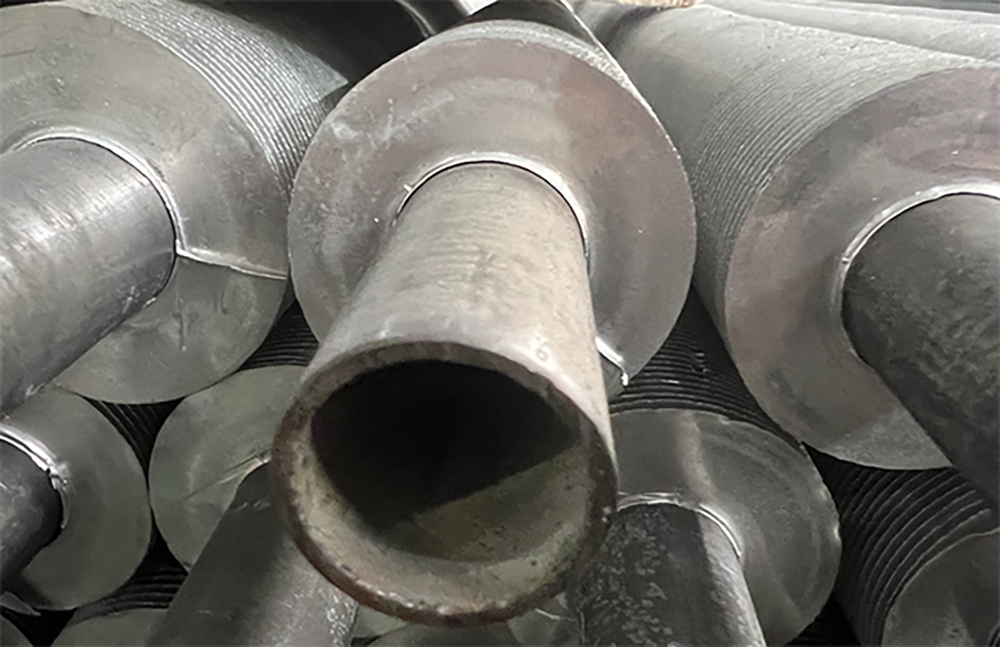
A tube with fins attached to its surface by welding
Professional Welded Fin Tube Manufacturer
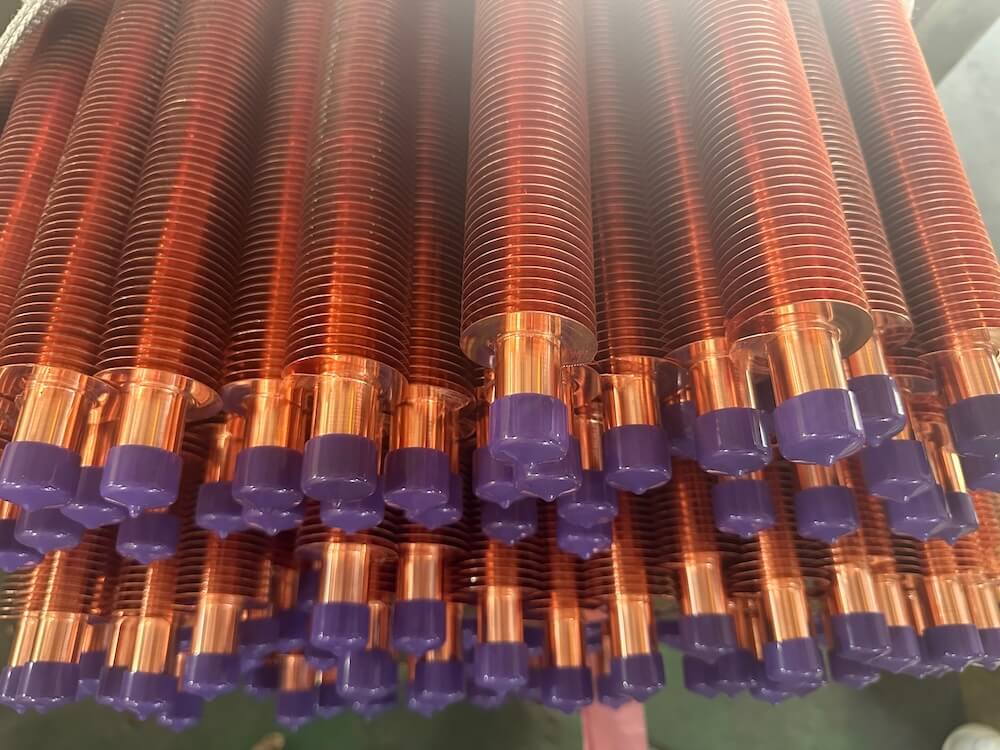
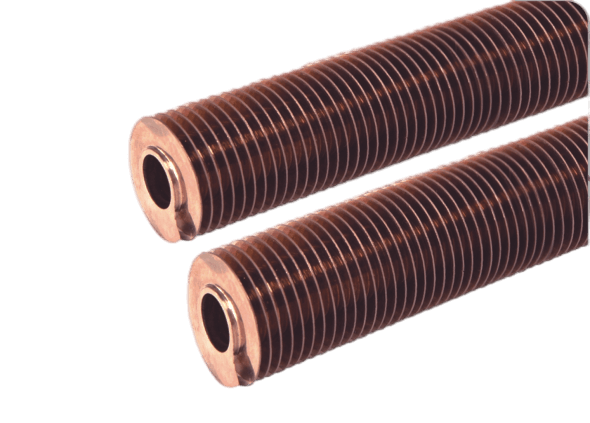
Welded fin tubes are heat exchange components used to enhance heat transfer efficiency by increasing the surface area of a tube. Fins are attached to the tube surface through welding, which creates an efficient heat conduction channel between the base tube and the fins. Our company design for various welded fin tubes, such as High-Frequency Welded Fin Tubes, laser welded fin tubes, etc.
Technical Specification:
- Fin height of the fin is more than 5mm;
- Heat transfer surface area is more than 7 times of the plain tube;
- Fin density: 5 fins/inch; 7 fins/inch; 8 fins/inch; 9 fins/inch.
- Outer diameter is 30-60mm;
- Fin height: 5-15mm;
- Maximum processing length: 7m.
Main Application:
- Welded fin tubes are primarily used in heat exchangers to enhance heat transfer between fluids, especially when there’s a significant difference in heat transfer coefficients between the fluids
- It’s also suitable for various industries including petroleum, chemical, steel, textile, wood, and food processing, etc.
Welded Fin Tube Parameter
| Parameter | mm | inch |
|---|---|---|
| Tube O.D. | 10~215 (mm) | 0.39"~8.46" |
| Tube Wall Thk. | 1~6 (mm) | 0.04"~0.24" |
| Tube Length | ≤18,500(mm) | ≤60.70" |
| Fin Thk. | 0.3~2.0 (mm) | 0.01"~0.08" |
| Fin Height | 3~30 (mm) | 0 12"~1.18" |
| Fin Pitch | 2~25 (mm) | 1~13 FPI |
| Fin Type | Solid, Serrated |
What Is Welded Fin Tube?
Welded Fin Tube is a type of heat exchanger component where fins are attached to a base tube using a welding process. This design significantly enhances the surface area available for heat transfer, improving efficiency in various applications. Main features:
Core Component: It consists of a base tube (usually made of metal like steel or copper) with fins attached to its outer surface.
Fins: These fins are typically thin metal strips or sheets that extend outward from the tube, significantly increasing its surface area.
Welding Process: The fins are attached to the tube using a welding technique, creating a strong and durable bond.

Advantages Of Welded Fin Tube
- Increased Heat Transfer: Significantly enhances heat transfer compared to bare tubes.
- Durability: The welded bond provides a strong and durable connection between the fin and the tube.
- Versatility: Can be manufactured with various fin shapes, sizes, and materials to suit different applications.
How do Welded Fin Tube Work?
- Increased Surface Area: The fins significantly increase the surface area, improving heat dissipation or absorption and enhancing thermal performance. For example, the heat dissipation area can be more than 8 times that of a bare tube.
Efficient Heat Transfer: The extended surface area promotes greater heat transfer between the fluid inside the tube and the surrounding medium, leading to faster and more efficient thermal exchange.
Heat Distribution: Fin tubes help distribute heat more evenly along the tube length, promoting uniform temperature distribution and reducing the risk of hot spots.
Turbulent Fluid Flow: Some designs, like “Cut and Twisted” longitudinal finned tubes, promote turbulent fluid flow, further enhancing heat transfer efficiency.
Variable Pitch Fins: If the structure of variable pitch fins is adopted, and the fin spacing downstream along the wind direction is smaller and smaller, it can maintain its high heat transfer efficiency under frost conditions, and extend its frost flushing time.
Applications Of Welded Fin Tube
Welded Fin Tubes are widely used in industries such as:
- Radiators, Air Preheaters, Waste Heat Recovery Systems, & Boiler Fin Tubes: High-frequency welded fin tubes are suitable for these applications.
- Oil coolers, condensers, water heaters: Medium-high finned tubes are applicable.
- Heat recovery associated with boilers for power generation and in furnace applications for the petrochemical industry: the main uses for high frequency welded finned tubes are in the heat recovery associated with boilers for power generation and in furnace applications for the petrochemical industry.
Other Applications Including :
- Boilers
- Condensers
- Economizers
- Heat Exchangers
- Evaporators
- Radiators
- Oil Coolers
- Air Preheaters
- Space Heating
- Drying Processes
Book A Video Call
Your reliable China partner of finned tubes for heat exchangers
Mass Production Photos
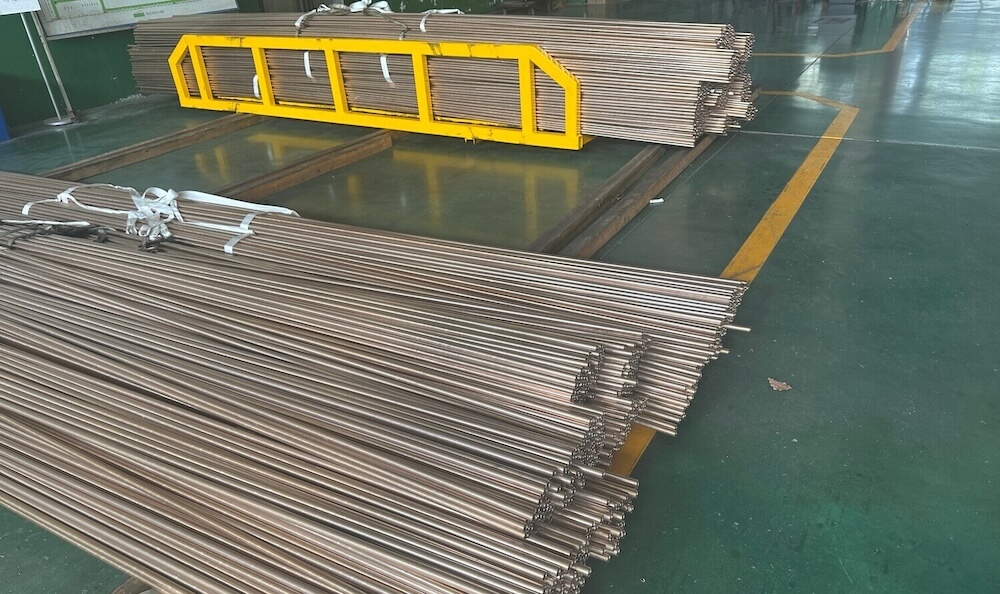
Check how we will produce your finned tube bulk orders of in our future cooperation. We take every step seriously, from raw material to packaging, to ensure that the fin tubs delivered to your warehouse are 100% qualified.
Frequently Asked Questions
About Welded Fin Tube For Heat Exchangers
What materials are available for the fins and tubes?
Common materials include carbon steel, stainless steel, alloy steel, and high nickel alloys. The choice depends on the operating environment and fluid compatibility.
What are the typical dimensions (fin height, thickness, spacing, tube diameter) available?
What welding processes do you use, and how do they impact the durability and heat transfer efficiency of the fin tubes?
Common welding processes include High-Frequency Resistance Welding (HFRW) and Submerged Arc Welding (SAW). HFRW is efficient for mass production, while SAW creates deep penetration welds for thicker materials. Proper welds reduce thermal resistance, directly impacting tube performance and ensuring maximum heat exchange.
What is the maximum operating temperature and pressure for your welded fin tubes?
This depends on the materials and welding process used. Consult the manufacturer’s specifications for the specific product.
What quality control and testing procedures do you have in place to ensure the integrity of the welds and the overall quality of the fin tubes?
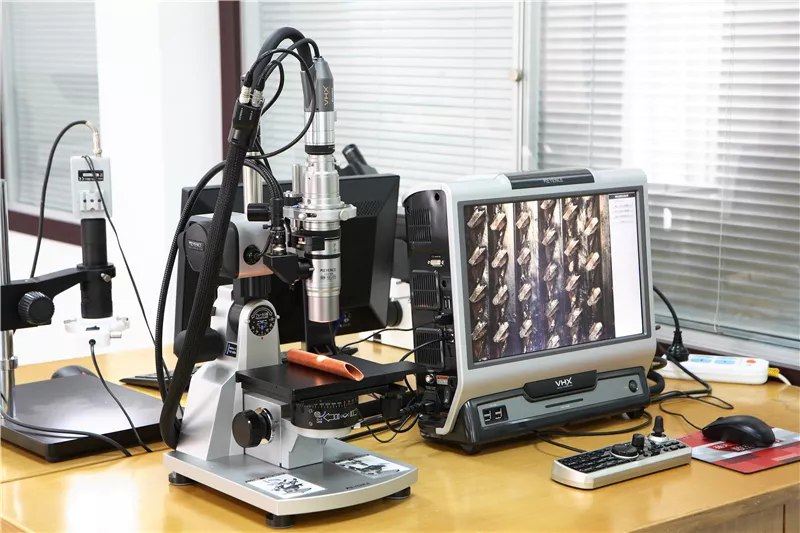
Quality assurance procedures include visual checks, non-destructive testing (NDT), and sometimes destructive testing for structural integrity.Strict quality control reduces defects, boosting efficiency and reliability.
What are the primary applications for your welded fin tubes, and what benefits do they offer compared to bare tubes or other types of finned tubes?
Welded fin tubes are used in heat recovery associated with boilers, gas turbines for power generation, and furnace applications for the petrochemical industry. Compared to bare tubes, they offer significantly enhanced heat transfer due to the increased surface area.
Can the external surfaces of the finned tubes be treated with corrosion-resistant fluids for protection?
Yes, if required, the external surfaces of finned tubes can be treated with corrosion-resistant fluids
.
What is the expected lifespan of the welded fin tubes, and what maintenance is required to ensure optimal performance?
Lifespan depends on the operating conditions and materials. Regular maintenance should include routine cleaning and periodic chemical cleaning to remove stubborn deposits.Also, inspect fins for damage, bending, or corrosion, and tighten all connections.
Request A Free Quote
We'd like to work with you
Send us a message if you have any question or request a quote. Our expert will response within 24 hours and help you custom your finned tubes heat exchanger solution!