Finned tubes are an essential component in many industrial and commercial heat exchange systems, widely used for enhancing thermal performance in applications like air conditioning, refrigeration, and HVAC. These simple yet highly effective devices are crucial for improving the heat transfer rate between fluids and the surrounding air, making them indispensable in systems that require efficient heat dissipation. In this blog, we will dive into what finned tubes are, how they work, and the reasons they are commonly used in heat exchangers.
Understanding Finned Tubes
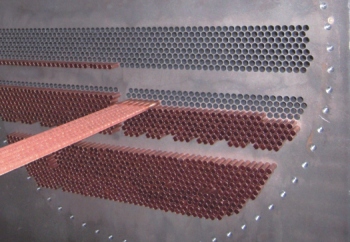
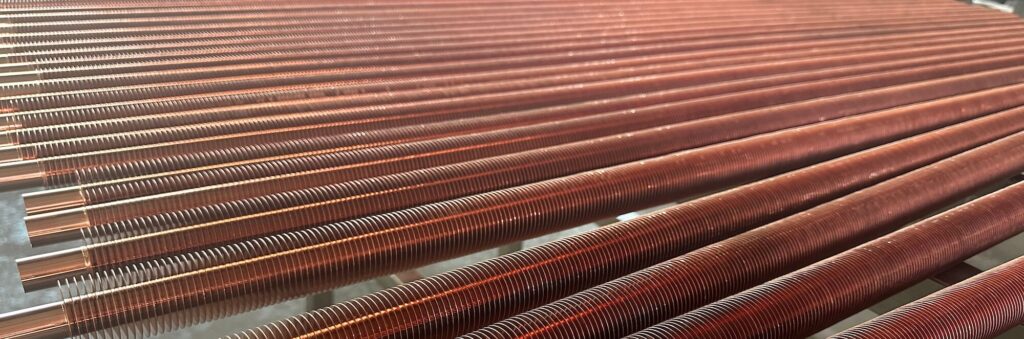
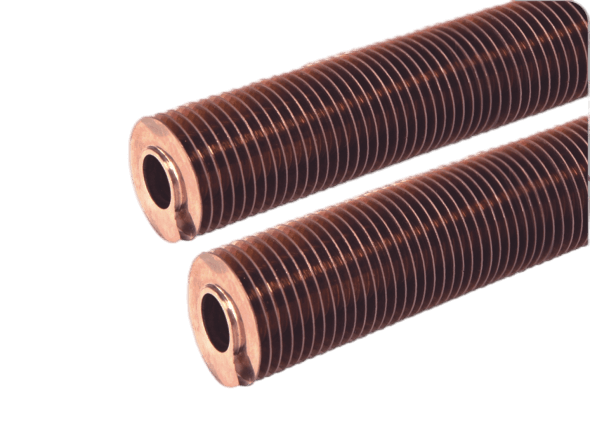
At their core, finned tubes are tubes equipped with extended surfaces, called fins, which are designed to increase the surface area in contact with the surrounding air or fluid. These fins are typically made of metal and are attached to the outer surface of the tube, usually by mechanical bonding, welding, or brazing.
The primary purpose of these fins is to improve heat transfer efficiency by increasing the contact area between the fluid inside the tube and the air or external fluid around the tube. The larger the surface area, the more heat can be transferred to the air or surrounding medium. This is particularly important when you need to cool a hot fluid or heat a cold one.
How Finned Tubes Work
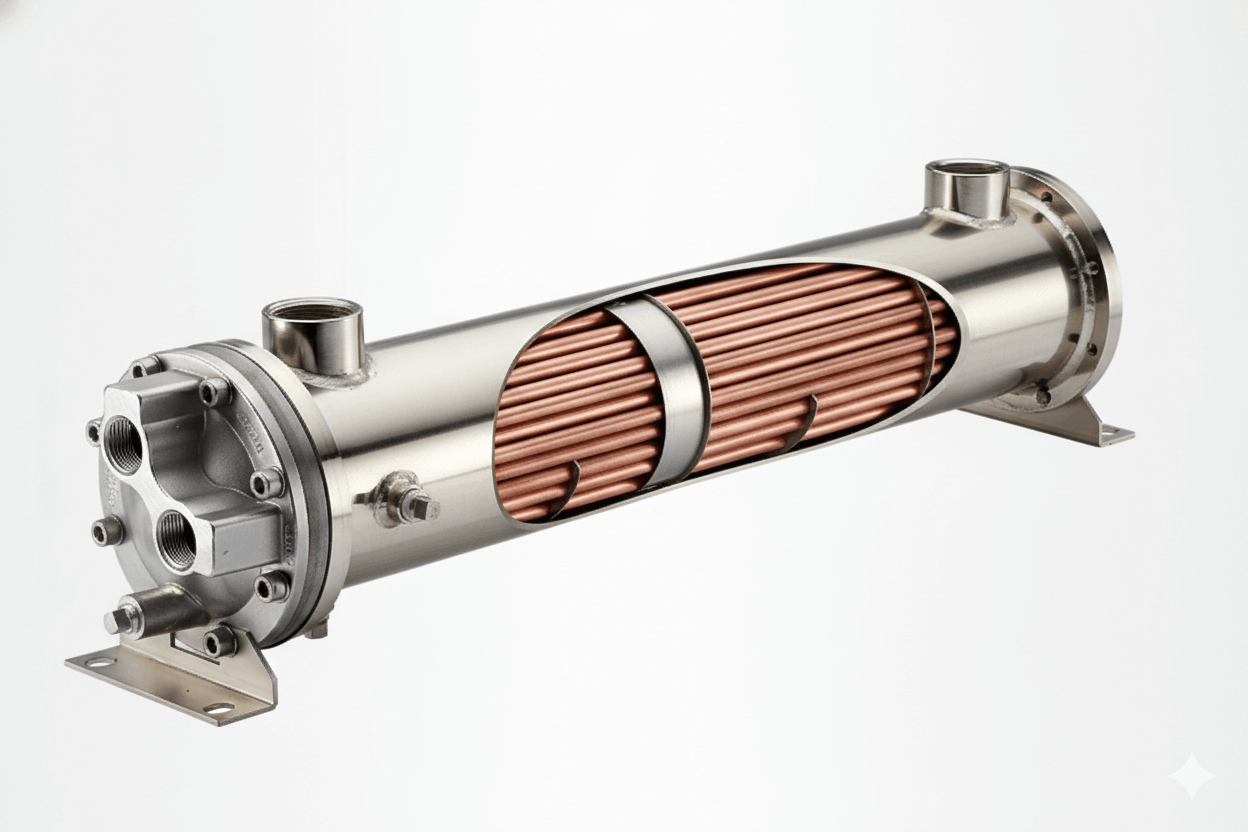
Finned tubes are commonly used in heat exchangers, where their function is to transfer heat from one medium (usually a fluid) to another (typically air). Here’s a breakdown of how they work:
- Heat Absorption: A fluid—such as refrigerant, hot water, or steam—flows through the tube. As the fluid inside the tube is at a higher temperature than the air or external fluid surrounding the tube, it begins to release heat.
- Heat Transfer: The heat from the fluid inside the tube conducts through the tube walls and reaches the fins. These fins increase the surface area, allowing more heat to be transferred to the surrounding air or external fluid. The fins effectively act as extensions of the tube, spreading the heat over a larger area and improving the efficiency of heat dissipation.
- Heat Dissipation: The air or external fluid, which is at a lower temperature, flows across the surface of the fins. As the air or fluid moves across the fins, it absorbs the heat, reducing the temperature of the fluid inside the tube. This process continues until the desired temperature is reached, and the heat exchange cycle is complete.
- Cooling or Heating: Depending on the application, the fluid either cools down as it loses heat to the surrounding air or heats up as it gains heat from the hotter fluid inside the tube.
Why Are Finned Tubes Important in Heat Exchangers?
Finned tubes are an essential part of many heat exchangers because they solve a common challenge: maximizing heat transfer without significantly increasing the size of the equipment. Here’s why finned tubes are so important:
- Increased Surface Area: The fins attached to the tubes dramatically increase the available surface area for heat transfer. By providing more space for heat to be exchanged between the fluid and the air, finned tubes enhance the overall thermal efficiency of the system. More heat can be transferred in a smaller space, which is essential in applications where space is limited.
- Efficient Heat Transfer: Finned tubes allow for more efficient heat transfer between fluids and air because of their expanded surface area. This is particularly critical in systems that deal with large amounts of heat, such as in air conditioning units, car radiators, and industrial cooling systems. By increasing surface area without increasing the overall size of the system, finned tubes help improve the system’s cooling or heating efficiency.
- Compact Design: Finned tubes can be designed in various configurations, allowing manufacturers to design more compact and efficient heat exchangers. For industries where space and weight are critical factors, such as in automotive or aerospace applications, finned tubes offer an optimal solution.
- Versatility: Finned tubes can be used in a wide range of applications, from air conditioning and refrigeration systems to large industrial cooling systems. They are highly customizable to meet the specific needs of different systems. The material of the fins can be adjusted to suit the temperature and pressure conditions of the fluid inside the tube, ensuring efficient heat transfer in any environment.
Types of Finned Tubes
There are various types of finned tubes, each designed for different applications. The two most common types are:
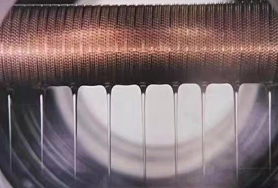
- L-Fin Tubes: These tubes feature fins that are shaped like the letter “L”. The fins are attached to the tube in a way that maximizes the surface area while maintaining good airflow around the tube. L-fin tubes are often used in air-to-air heat exchangers and are especially effective in applications where space is limited.
- Spiral Finned Tubes: These tubes have a spiral of fins wrapped around the tube. The spiral design provides a larger surface area and also creates turbulence in the fluid or air flowing over the fins. This turbulence enhances heat transfer by disrupting the boundary layer of air, making spiral finned tubes ideal for high heat load applications like industrial cooling systems.
- Extruded Finned Tubes: In this design, the fins are formed through an extrusion process, where the tube material is forced through a die to create fins. This method is particularly effective for mass production and provides a highly efficient heat transfer surface.
- Plate Finned Tubes: These tubes have flat, plate-like fins attached at regular intervals along the tube’s length. This type of finned tube is commonly used in heat exchangers that require a higher heat transfer rate, such as in refrigeration units or heat recovery systems.
Benefits of Finned Tubes
- Enhanced Heat Transfer: Finned tubes significantly increase the heat exchange rate due to the expanded surface area, making them ideal for applications where efficient cooling or heating is needed.
- Compact Design: Finned tubes allow for more compact heat exchangers, reducing the overall size of the system without sacrificing performance.
- Cost-Effective: By improving heat transfer efficiency, finned tubes help reduce the size and cost of heat exchangers. Less energy is needed to achieve the same level of heat transfer, leading to cost savings in energy consumption.
- Durability: Finned tubes are made of materials like copper, aluminum, or stainless steel, which are known for their durability and resistance to corrosion, ensuring long-lasting performance in harsh environments.
Applications of Finned Tubes
Finned tubes are used in various industries, including:
- HVAC Systems: For heating and cooling large buildings.
- Refrigeration: In both commercial and industrial refrigeration units.
- Automotive: In car radiators and engine cooling systems.
- Oil & Gas: In heat exchangers for industrial processes.
- Power Plants: For cooling turbines and other machinery.
Conclusion
Finned tubes are an essential innovation in the field of heat exchangers. By increasing the surface area for heat transfer, they allow systems to operate more efficiently while maintaining a compact size. From air conditioning units to large industrial cooling systems, finned tubes are at the heart of many modern heat transfer applications.
Incorporating finned tubes into a heat exchanger system not only increases thermal efficiency but also reduces energy consumption and overall system size. Whether you’re working in HVAC, refrigeration, automotive, or industrial processes, understanding how finned tubes work and why they’re so effective is crucial for optimizing your cooling and heating solutions.