Over the past few years, I’ve noticed a clear shift in how engineers, manufacturers, and even policymakers are thinking about thermal systems. Efficiency is no longer just a technical target—it’s a regulatory requirement, a market differentiator, and in many cases, a survival factor. At the center of this shift, one component keeps gaining attention: high-efficiency finned copper tubes.
Having spent decades working with finned tube technologies, I can confidently say that what we’re seeing today is not just incremental improvement—it’s a structural evolution driven largely by the rapid expansion of heat pump systems worldwide.
The Heat Pump Boom Is Reshaping the Industry
If you follow HVAC trends even casually, you’ve probably seen the explosion in demand for heat pumps, especially in Europe, North America, and increasingly in Asia. Governments are pushing electrification and low-carbon heating, and heat pumps are the cornerstone of that transition.
But here’s the reality: a heat pump is only as good as its heat exchanger.
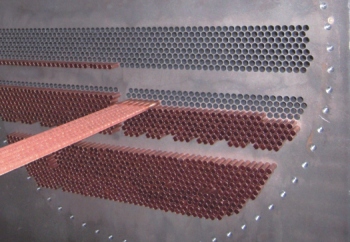
This is where finned copper tubes come in. In evaporators and condensers, the ability to transfer heat efficiently between refrigerant and air is absolutely critical. Traditional smooth tubes simply cannot keep up with the performance expectations of modern systems. That’s why we’re seeing a strong shift toward advanced finned copper tube designs—especially internally enhanced and externally finned configurations.
Why Copper Still Dominates (Despite Cost Pressures)
One question I often get, especially from newcomers in the industry, is: “Why are we still using copper when aluminum is cheaper?”
It’s a fair question—but it misses some key technical realities.
Copper offers superior thermal conductivity, excellent corrosion resistance, and unmatched reliability in refrigerant environments. In high-efficiency systems where every percentage point of performance matters, these properties are not optional—they are essential.
In my experience, when manufacturers attempt to substitute copper with lower-cost materials, they often end up compensating with more complex designs or larger heat exchanger surfaces. In the end, the cost savings are not as significant as they initially appear, especially when you factor in long-term durability and maintenance.
The Rise of Microfin and Enhanced Surfaces
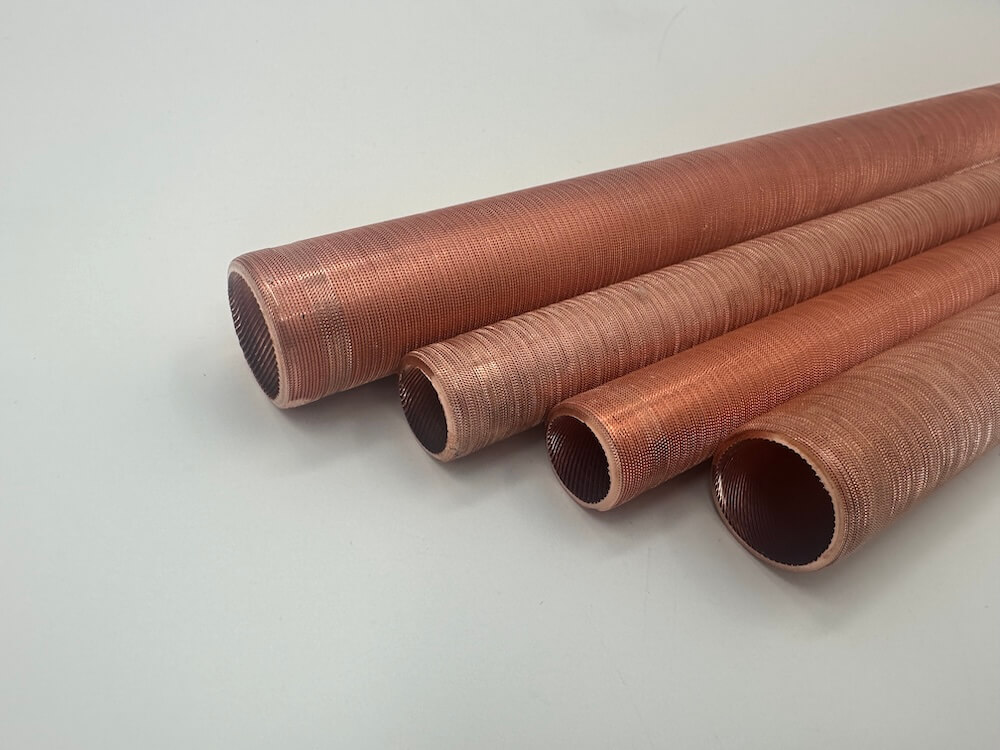
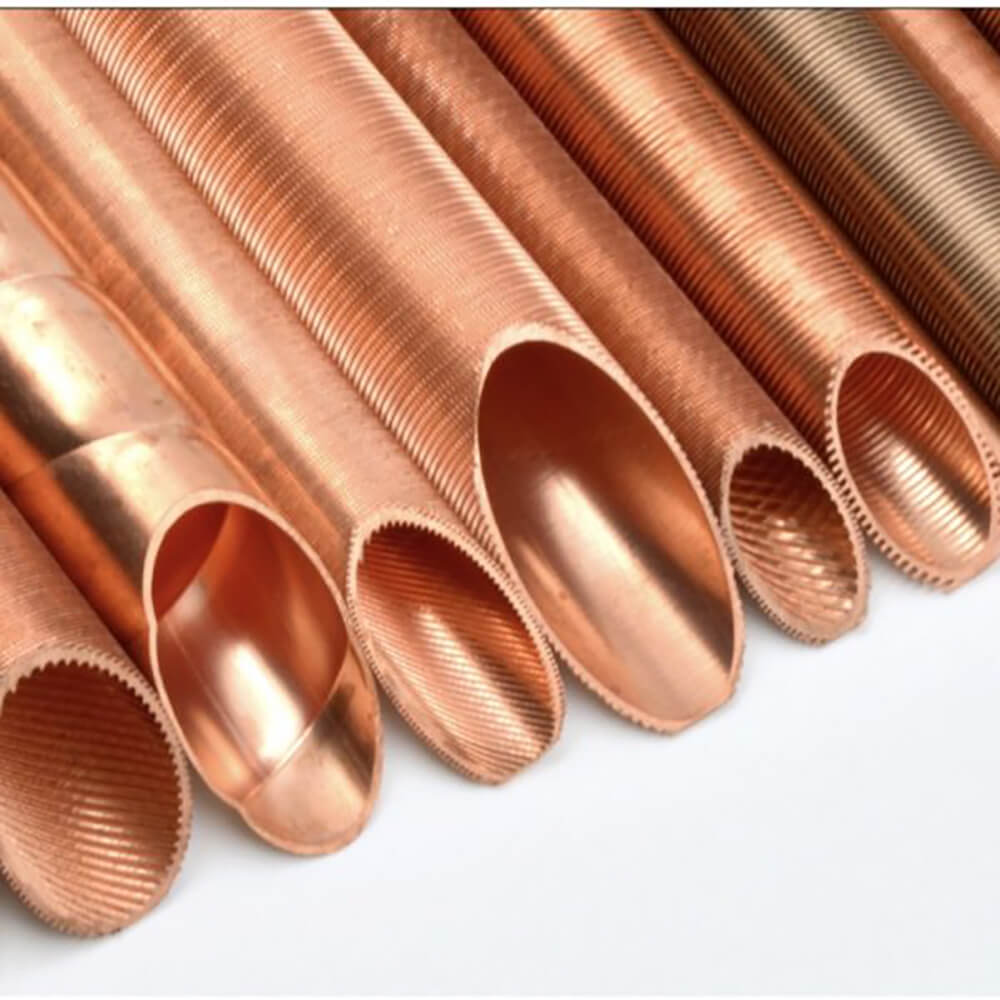
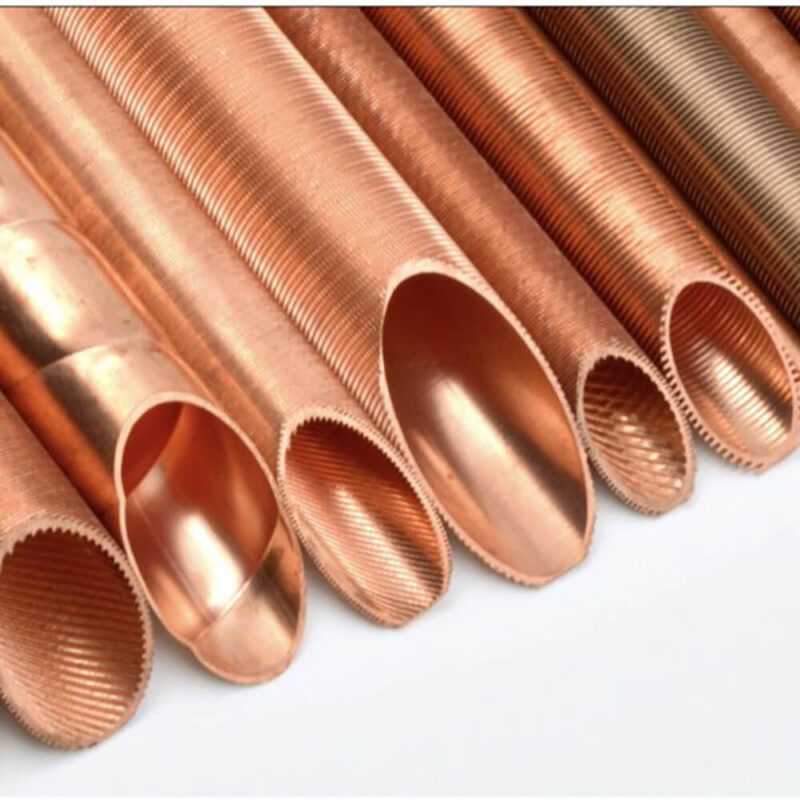
One of the most exciting developments in recent years is the widespread adoption of microfin copper tubes.
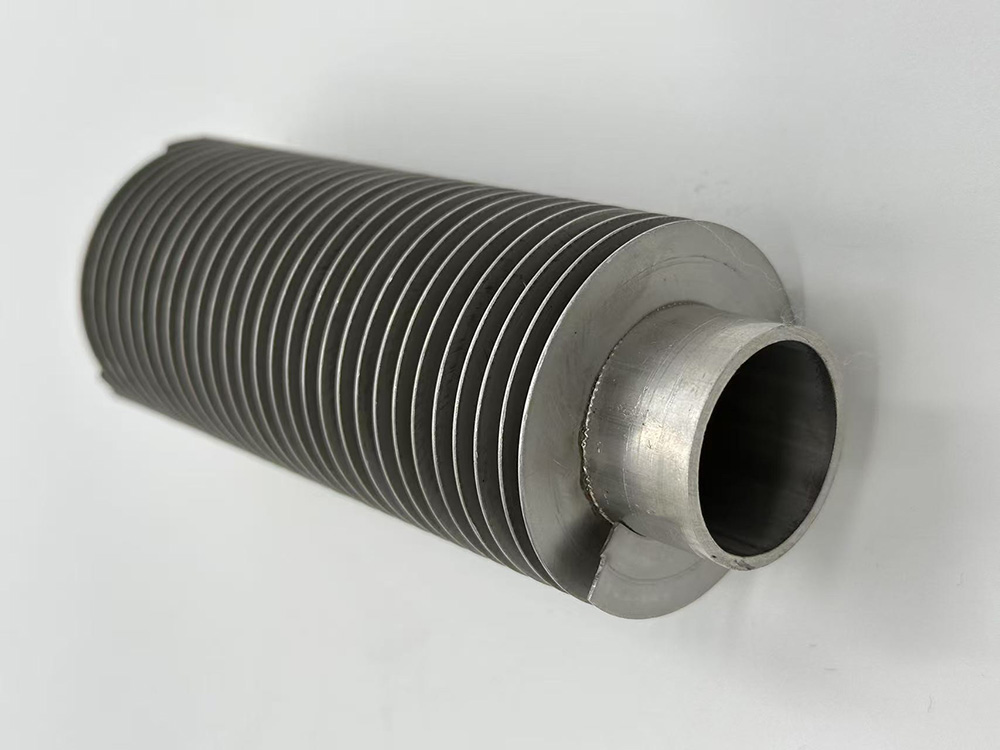
These tubes feature internally grooved surfaces that significantly enhance heat transfer by increasing turbulence and surface area within the tube. When combined with external fins—whether L-foot, embedded, or extruded—you get a highly optimized heat transfer structure.
From what I’ve observed in real-world applications, microfin tubes can improve heat transfer efficiency by 20% to 40% compared to plain tubes, depending on operating conditions. That’s not a marginal gain—that’s transformative.
However, there’s a nuance here that many overlook: not all microfin designs are created equal. Parameters such as fin height, helix angle, and groove geometry must be carefully matched to the refrigerant type (e.g., R32, CO₂, or new low-GWP blends) and operating conditions. This is where deep technical expertise becomes critical.
Compatibility with New Refrigerants
Another hot topic that cannot be ignored is refrigerant transition.
As the industry moves away from high-GWP refrigerants, we’re seeing increasing adoption of alternatives like R32, R290 (propane), and CO₂. Each of these refrigerants has unique thermophysical properties, which directly impact heat exchanger design.
For example:
- CO₂ systems operate at much higher pressures, placing stricter demands on tube strength and manufacturing precision.
- R290 offers excellent thermodynamic performance but requires careful system design due to flammability concerns.
Finned copper tubes, particularly those made from high-purity copper alloys, have proven to be highly adaptable across these new refrigerant systems. In my opinion, this adaptability is one of the key reasons copper remains indispensable.
Manufacturing Precision Is Now a Competitive Edge
Another trend I’ve seen accelerating is the importance of manufacturing consistency.
In the past, small variations in fin geometry or tube dimensions were often tolerated. Today, with high-efficiency systems operating under tighter margins, those variations can lead to measurable performance losses.
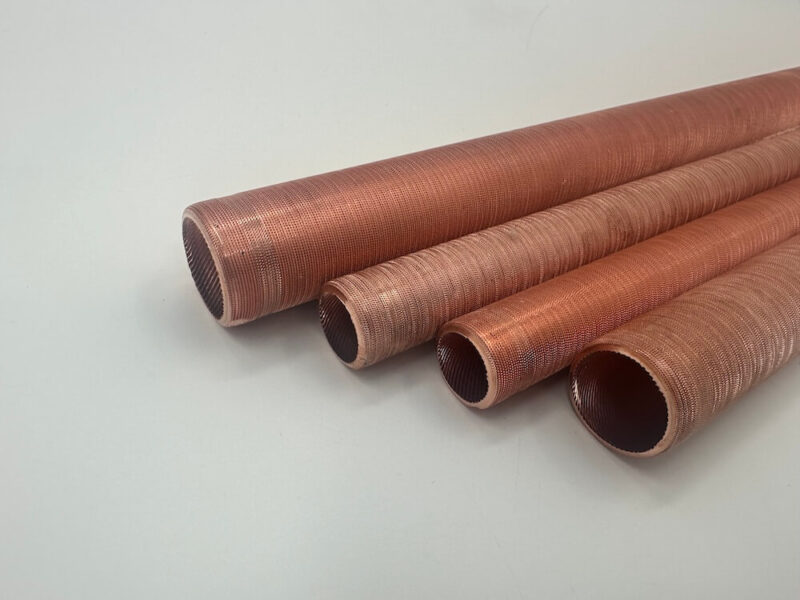
Modern production techniques—such as high-speed finning machines, precision extrusion, and advanced quality inspection systems—are becoming essential. In fact, I would argue that the future leaders in this industry will not just be those who understand materials, but those who can control manufacturing at a microscopic level.
Sustainability: Not Just a Buzzword
Let’s talk about sustainability—because it’s no longer optional.
Copper has a significant advantage here: it is 100% recyclable without loss of performance. In an era where lifecycle analysis is becoming a standard requirement, this matters a lot.
Moreover, high-efficiency finned copper tubes contribute directly to energy savings. A more efficient heat exchanger means less electricity consumption, which translates to lower carbon emissions over the system’s lifetime.
From my perspective, this dual benefit—recyclability and operational efficiency—makes finned copper tubes a strong player in the push toward greener technologies.
My Personal Take on Where This Is Heading
If I had to summarize where the industry is going, I would say this: integration and optimization.
We are moving toward systems where the heat exchanger is no longer a standalone component, but a highly integrated part of a larger thermal management strategy. This means closer collaboration between tube manufacturers, system designers, and even software engineers.
I also believe we will see more hybrid designs—combining different fin structures, materials, and surface treatments to achieve specific performance targets.
And finally, I expect digital tools—such as simulation and AI-driven design optimization—to play a much bigger role. But even with all these advancements, one thing remains constant: the fundamental importance of good materials and sound engineering principles.
Final Thoughts
After more than four decades in this field, I’ve learned that trends come and go—but true performance is always rooted in fundamentals.
High-efficiency finned copper tubes are not just a “hot topic” because they are new—they’re a hot topic because they solve real problems in a rapidly changing energy landscape.
If you’re involved in heat exchanger design, HVAC manufacturing, or thermal system optimization, this is an area you simply cannot afford to overlook.
And if you’re just entering the industry, my advice is simple: don’t just learn the specifications—understand the physics, the materials, and the manufacturing behind them. That’s where the real value lies.