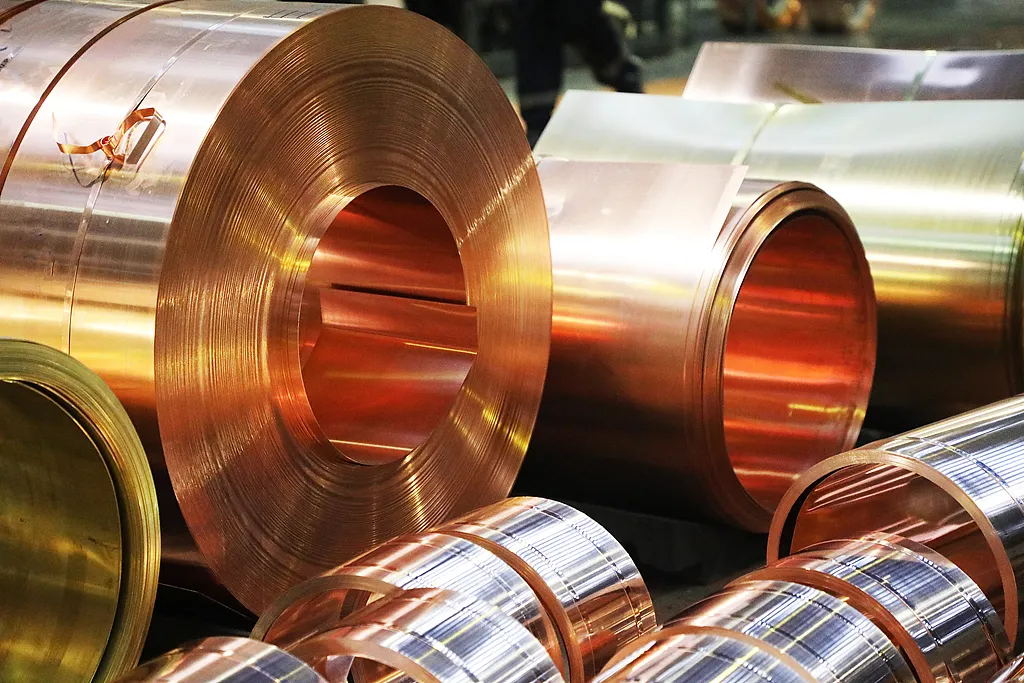
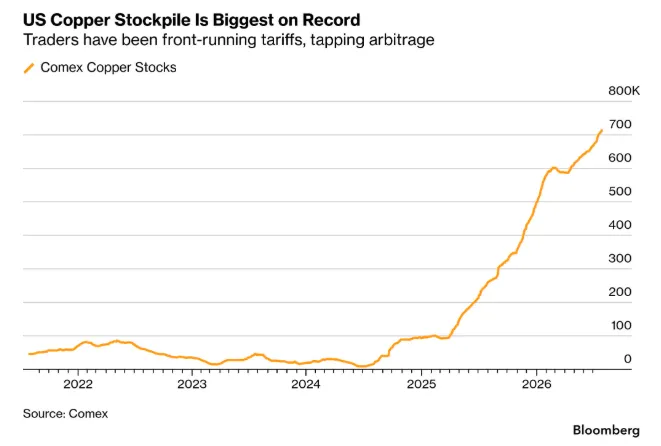
In recent years, one trend has stood out sharply in the global commodity market: the United States is aggressively stockpiling copper on an unprecedented scale. To put it simply, this is not a random market move. Driven by tariff expectations, financial incentives, and national strategic layout, the U.S. has turned copper into a core strategic resource related to national security, energy transformation, and tech infrastructure competitiveness.
This article breaks down the real reasons behind America’s copper stockpiling boom, covering short-term market arbitrage logic and long-term geopolitical and industrial strategies.
The Immediate Trigger: Tariff Expectations Create Huge Arbitrage Opportunities
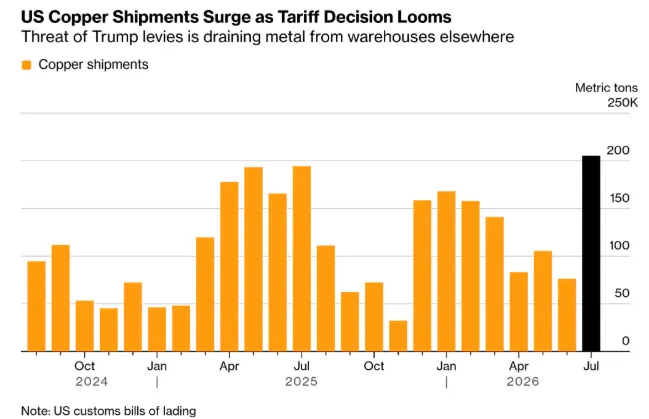
The direct driver of the U.S. copper stockpiling wave is the clear expectation of upcoming tariff hikes. In 2025, the U.S. launched a Section 232 national security investigation into copper products and imposed a 50% tariff on semi-finished copper goods. The market widely anticipates that the U.S. will further raise tariffs on refined copper — 15% in 2027 and up to 30% in 2028.
Facing upcoming tariff barriers, global traders have rushed to ship refined copper to U.S. warehouses in advance to avoid future cost increases. In addition, copper priced on the New York COMEX consistently maintains a premium over London LME copper, creating stable cross-market arbitrage margins for global merchants.
To further fuel this trend, the U.S. Export-Import Bank launched a dedicated copper reserve program with a $12 billion credit line. This policy substantially reduces the capital cost for private institutions to stockpile copper, encouraging more market capital to participate in U.S. copper warehousing.
It is critical to clarify:the U.S. government is not directly purchasing massive amounts of copper. Instead, it has created a profitable policy and market environment that drives global traders to actively deliver and store copper in the United States.
Strategic Upgrade: Copper Is Listed as a Critical National Security Mineral
Beyond short-term arbitrage, the fundamental reason for U.S. copper stockpiling is the official strategic upgrade of copper’s status. In November 2025, the U.S. Geological Survey formally included copper in the list of critical minerals, confirming that copper is indispensable to U.S. national security, energy transition, and manufacturing resilience.
As an irreplaceable metal with superior electrical and thermal conductivity, copper supports three core high-growth demand sectors in the U.S.:
Energy Transition: Wind power, solar photovoltaic systems, national grid upgrades, and new energy vehicle motors and wiring all rely heavily on copper. Renewable energy power generation consumes far more copper than traditional thermal power generation. The U.S. is in urgent need of large-scale renovation of its aging power grid, bringing sustained and massive copper demand.
AI Digital Infrastructure: Large-scale data centers require extensive copper wiring and liquid cooling heat dissipation systems. High-end servers used for AI computing consume significantly more copper than ordinary equipment, forming a new wave of rigid demand.
Military and National Defense: Precision military electronics, radar systems, naval vessels, and missile equipment all depend on high-precision copper materials. Stable copper supply is a basic guarantee for U.S. military industrial capacity.
However, the U.S. suffers from obvious industrial shortcomings: limited domestic copper mining output and insufficient smelting and refining capacity, making it highly dependent on overseas imports. Major global copper producers such as Chile, Peru, and the DRC are frequently affected by strikes, policy adjustments, and geopolitical conflicts, leading to unstable supply chains. Stockpiling copper has become a key measure for the U.S. to hedge supply risks.
Deep Layout: Seize Pricing Power and Reshape the Global Copper Supply Chain
The U.S. copper stockpiling strategy also serves its long-term goal of dominating global commodity pricing and restructuring supply chain patterns.
As the core global copper pricing center, the COMEX market’s massive physical copper inventory greatly strengthens U.S. influence over global copper prices. By locking a large amount of tradable spot copper in U.S. warehouses, the U.S. can create structural spot tightness in other global regions, disrupting the original supply chain layout.
At the same time, global copper smelting capacity is highly concentrated overseas. Through trade barriers and spot reserve accumulation, the U.S. intends to force the reconstruction of its domestic copper smelting and processing industrial chain, reducing long-term reliance on overseas refining capacity and improving the autonomy and security of its industrial supply chain.
Key Misconception to Clarify
It is worth noting that the copper stored in COMEX warehouses is not fully consumed by U.S. domestic industries in the short term. Most of the inventory is trader warehousing stock and futures delivery warrants, which are essentially financialized physical assets. U.S. annual industrial copper consumption cannot digest these massive inventories quickly. Therefore, U.S. copper stockpiling is a dual layout of strategic reserve and financial arbitrage, rather than simple industrial inventory preparation.
Final Summary
In the short term, U.S. tariff expectations and cross-market price spreads drive global capital and merchants to actively stock copper in the U.S. for arbitrage profits. In the long run, driven by energy transition, AI infrastructure construction, and military security needs, copper has become a top-tier strategic resource for the U.S. Facing insufficient domestic production and unstable overseas supply chains, the U.S. is seizing global copper spot resources to consolidate commodity pricing power and build a safer, more independent industrial supply chain system.
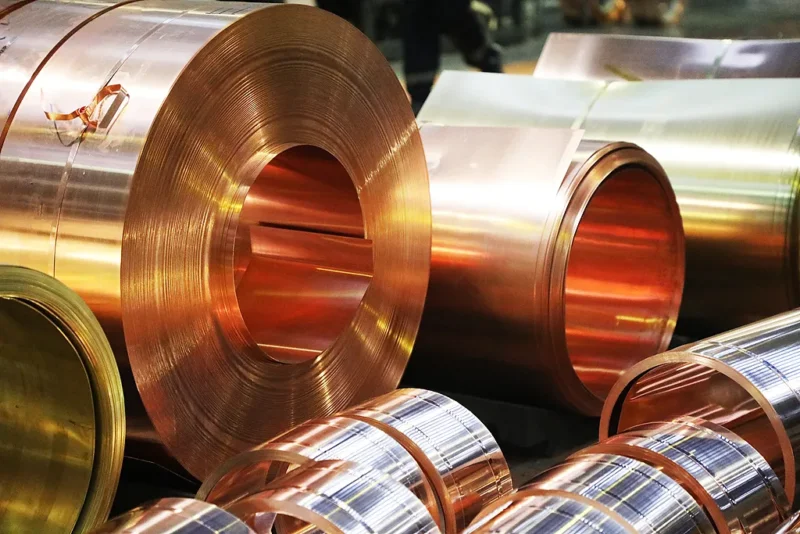
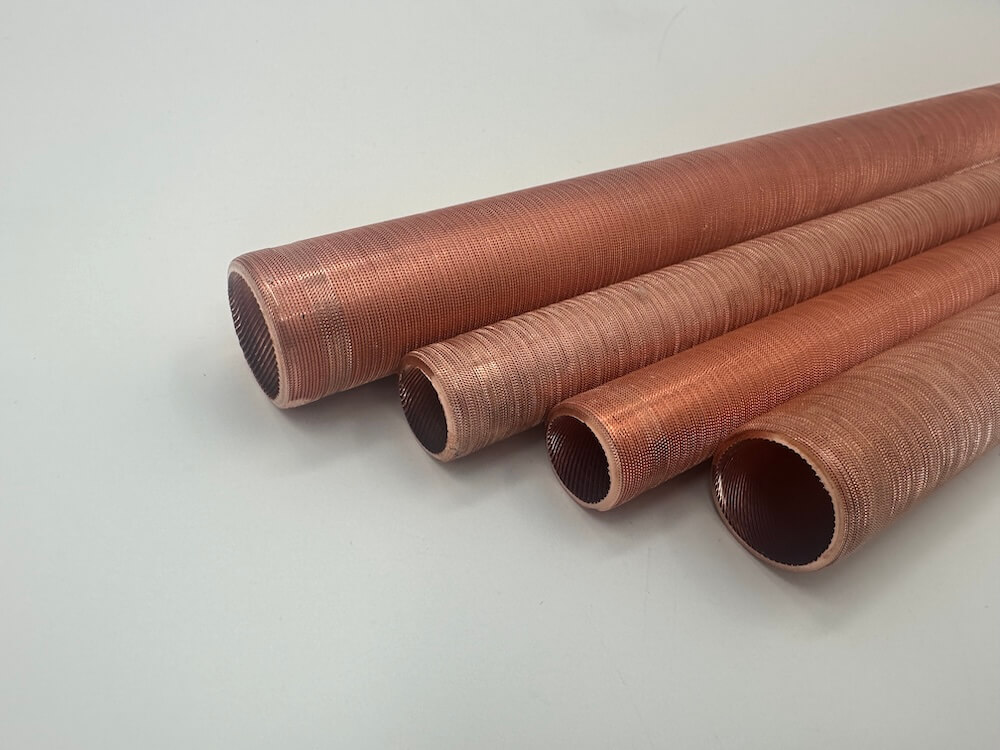
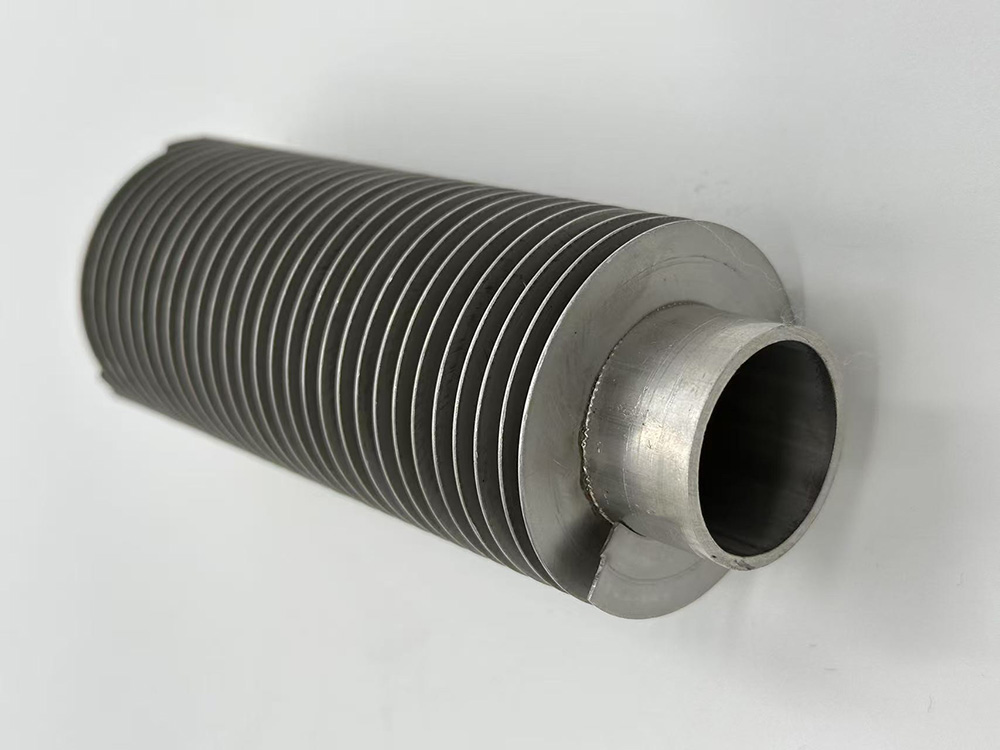
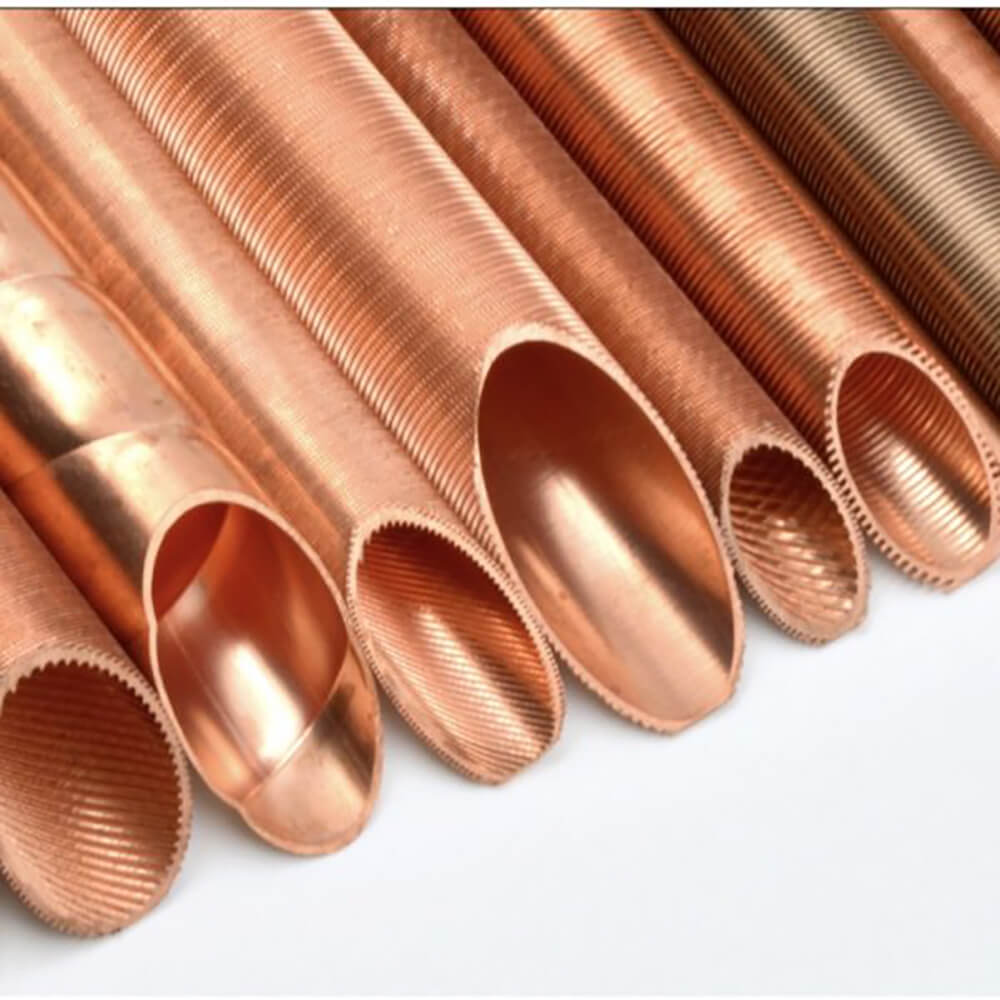
The U.S. copper stockpiling strategy is not merely a macro commodity and geopolitical layout; it also delivers long-term structural dividends for high-end copper processing sectors represented by copper fin tubes. While bulk raw copper focuses on strategic reserves and pricing competition, precision copper fin tube products from Cufin Tube occupy an irreplaceable core position in the high-value industrial chain, becoming the key terminal carrier that realizes copper’s strategic value.
As the core heat dissipation and heat exchange component for AI data centers, new energy vehicle thermal management systems, wind power and photovoltaic energy storage equipment, copper fin tubes feature ultra-high thermal conductivity, corrosion resistance, and full recyclability. Different from ordinary copper materials that only meet basic conductive demands, Cufin Tube’s precision finned tubes solve the core pain points of high energy consumption, insufficient heat dissipation efficiency and short service life of high-power new energy and digital infrastructure. They effectively reduce the overall operating energy consumption of equipment, extend the service life of core industrial facilities, and support the stable operation of high-load AI computing centers and new energy systems.
In the context of global copper supply chain restructuring, raw copper stockpiling only solves the supply security problem in the upstream link. Only high-precision deep processing technologies represented by Cufin Tube can convert strategic copper resources into real industrial efficiency, energy-saving benefits and infrastructure competitiveness. This also explains why high-end copper fin tube processing capacity has become a new hidden core track in the U.S. energy transformation and technological competition.